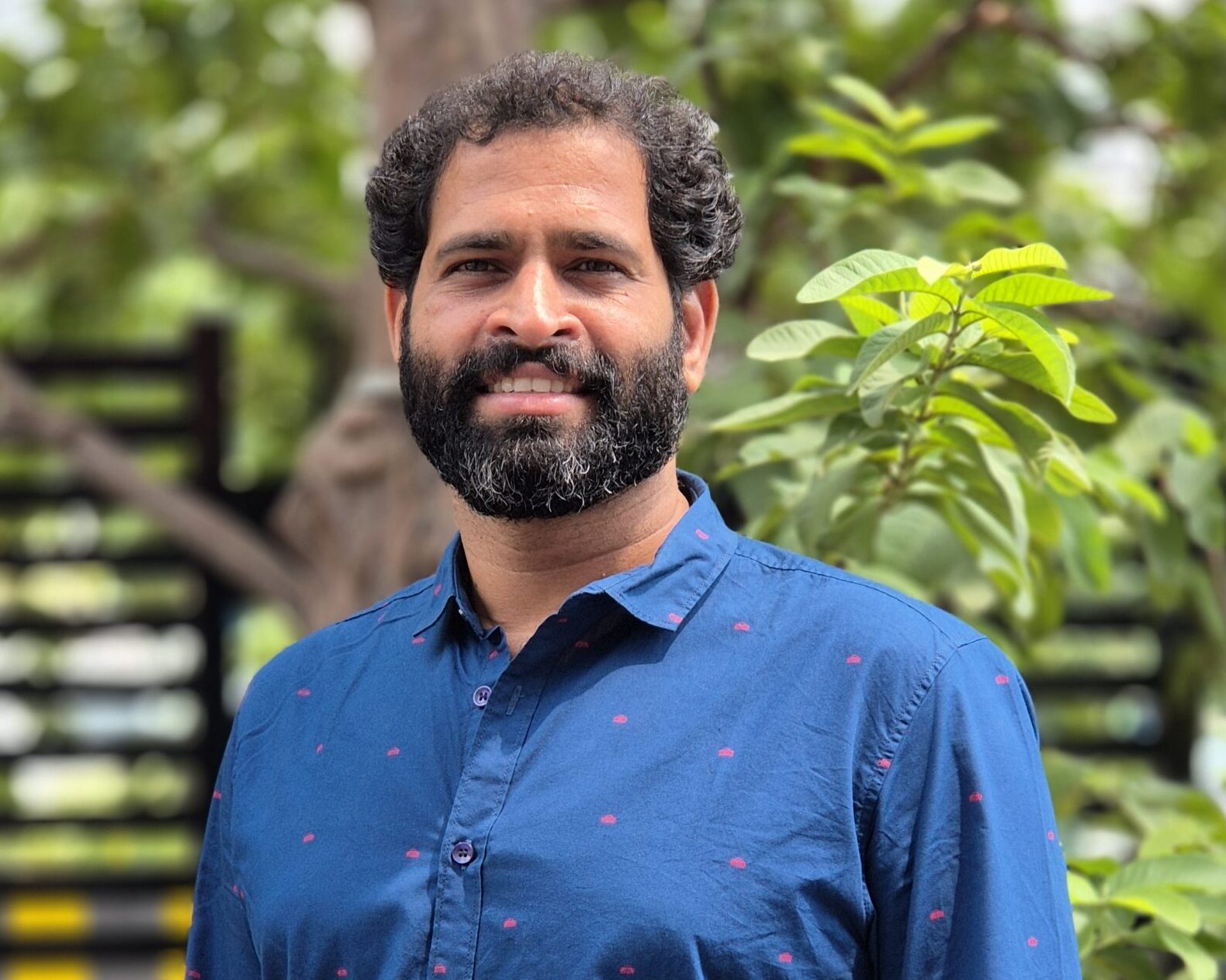

This essay is adapted from an Ignite Talk Dmitry Shishkin gave at Newsgeist 2026 in Hamburg. You can watch the video here.
Five minutes, 20 slides, 15 seconds each — a tough Ignite format at Newsgeist. In Hamburg, I used my time to argue that the successful future newsroom is an action centre.
That action centre is based on the premise of indispensability: you must play such an important role in people’s lives that they can’t imagine it without your guidance and companionship. I am especially proud that this concept has little to do with AI – it’s all about your original content, your clear mission statement and your commitment to being genuinely helpful.
Newsrooms must first tackle the issue of commodity content, i.e. the sameness of their output. If you are lucky, only 20% of your output is original, at least in my experience. In reality, it’s more like 10%, if we are honest with each other. If everyone has what you have, why does anyone need you? Let machines do commodity — that stuff will be there long before a reader ever reaches us. However, what people will still come to us for is our original content: access, expertise, reporting nobody else has. That reporting is expected to be actionable, especially by younger people, who are asking, ‘now what?’
Some of you might recognise me as ‘that user needs guy’ – in the last 10 years we made great leaps from the Factual axis to Contextual and even Emotional; that’s where the original BBC World Service user needs model stopped. Then we added the Actionable axis, represented by Help me and Connect me user needs. Unsurprisingly, it is also the axis we serve the least, because it is the hardest one to retrain yourself around. Younger audiences care deeply about the Actionable axis (I don’t mean activism here, I mean practical help from your robust journalism).
Most newsrooms don’t do the Actionable bit well, and I admire local news colleagues for leading the way. Unless we get ourselves off the needle of the old publishing factory (which has been commissioning volume, chasing reach and measuring page views), we will keep producing stuff nobody needs. That tired old factory was never created to produce usefulness.
The future action centre marries topics with services. An education niche offers you a kindergarten or high school finder; one on politics offers a promise tracker. A travel niche gives you walking routes, while a books niche suggests further reading not based on recent reviews but on your own criteria. The stronger the niches and services they offer, the deeper the connection with their community.
Welcome to the new editorial operating system: the set of decisions, rules and data that determine what a newsroom makes, for whom, and how it knows it’s working. It has four layers.
Purpose. Which audience value are you building? My answer is indispensability: what will change in your audience’s lives if your media were to disappear tomorrow?
Decisions. Commissioning against user needs and against the few topics you genuinely own, rather than against yesterday’s traffic. Check your subtopics and be honest about how many of them should be closed.
Structure. A shared taxonomy and structured content, so editors, product teams and machines speak one language. If machines cannot read it, they cannot act on it for your readers.
People and incentives. Who sits at the table, and what gets measured. Count stories, and you will get more stories. Count decisions, and you are on your way.
As you see, I am not mentioning AI, as it sits outside these four layers; it’s just interwoven into everything we do.
Is there proof? Not a single smoking gun, but the signals are encouraging. When the BBC World Service changed what it commissioned rather than how much, the audience responded. “Educate me” content was only a small fraction of the total, but on a piece-by-piece basis it was much more effective than an “update me” story. Across the Ringier Media International portfolio I used to run, articles clearly focused on a user need scored 34% higher in reads (and other KPIs) than unfocused ones (a Smartocto study). Niche publications are launching interactive guides in days – something that used to take weeks.
I ended the talk with a question I expect to be quoted as often as my favourite. The old question is, “What will change in your audience’s lives if your media were to disappear tomorrow?” The new question is: “Whose tomorrow will be easier because of you?”
The action centre should be discussed together – by journalists, technologists and policymakers. That proverbial ‘relevance’, so often mentioned in newsroom strategy meetings, has a better name: indispensability.
I’ll leave you with three tests to take to your newsrooms. Could a machine replace what you publish? Do people act on your journalism? Are you internally built to deliver that?
If the honest answer to the third is no, look at your operating system before you look at your content.
Dmitry Shishkin is an independent media advisor working with senior leadership teams who want to build audience-centred organisations without losing editorial ambition or commercial discipline.
Share