The moral of this story for me is it’s happening here.” 1
U.S. journalists being arrested for reporting on protests? Check.
The U.S. government reversing policy that provided protections for journalists in leak investigations? Check.
Legal systems being used to criminalize and suppress speech? Check.
The U.S. government seizing a Washington Post reporter’s phones, laptops and watch as part of a national security leak investigation? Check.
Government officials being fired for sharing information that the president does not like? Check.
These are just a few ways press freedoms in the United States have come under attack.
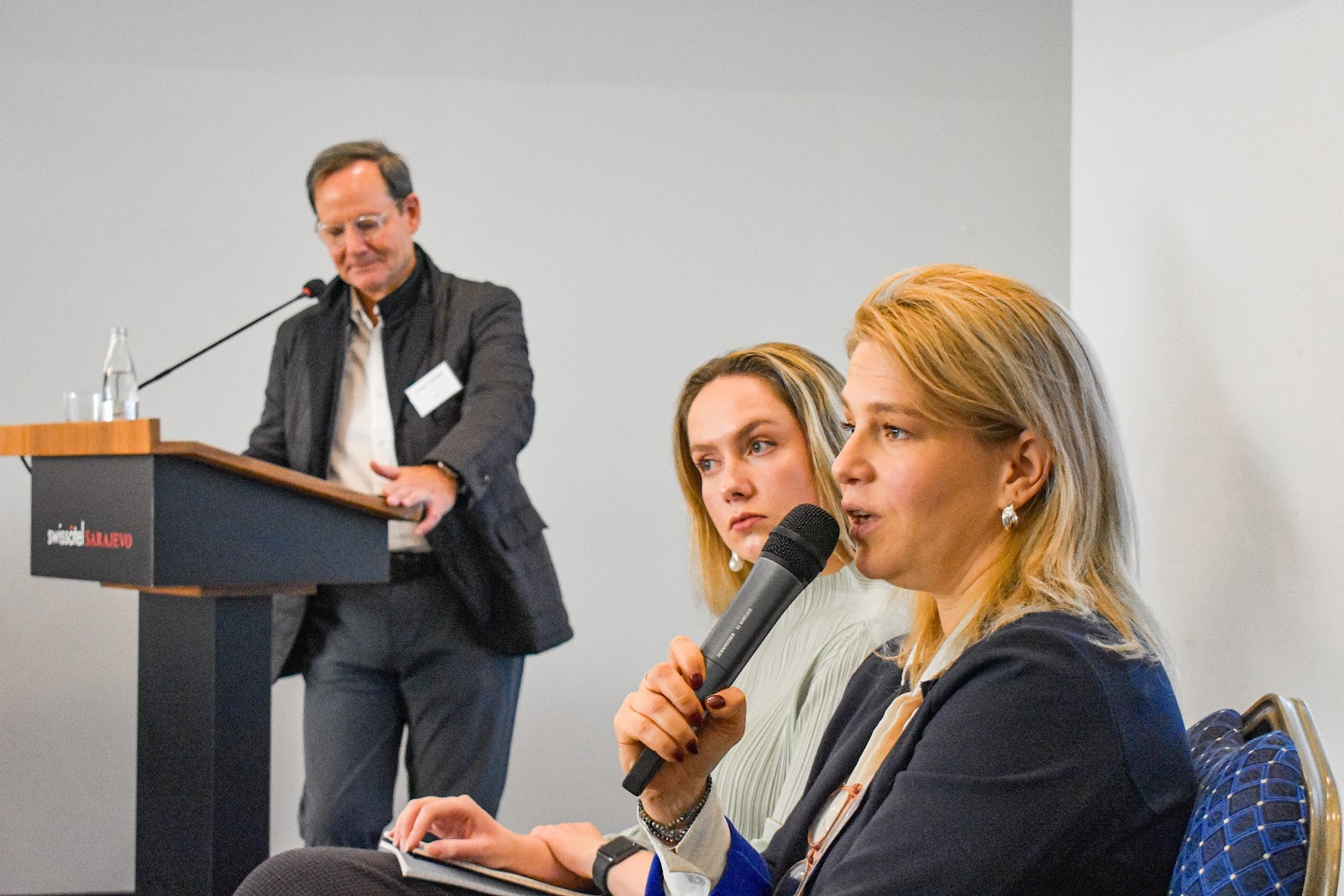
CNTI recently held our second roundtable discussion on the erosion of press freedom, building off of our “Letters From the Field” series that ran during the summer of 2025. This powerful discussion — held just days before two journalists were arrested for covering a protest inside a St. Paul church — involved a mix of local U.S. journalists and members of the news media from Europe, Latin America and Africa who came together to address threats to press freedoms. These practitioners shared their experiences — both past and present — to learn from each other, build solidarity and forge a path forward.
The discussion centered on how authoritarian-style leaders strategically chip away at press freedoms, the legal maneuvers being used to silence journalists, the growing challenges in how reporting happens at international borders and what journalists can — and should — do to maintain their right to report.
Here’s a look at some of the key insights that were shared.
The Authoritarian Playbook to Diminish Press Freedoms
What we have seen is that here is a playbook and that it’s used everywhere and it’s being used step by step …”
As CNTI has seen in our global discussions these past two and a half years, this roundtable discussion identified a clear, almost step-by-step strategy of information control that has repeated — and continues to repeat — itself across decades and throughout all regions of the world. U.S. participants, less experienced with these tactics, reacted with both surprise and shock at how closely what they are now encountering mirrors what others have seen in the rest of the world.
Examples came from:
- Guatemala, where, as Jose Zamora, Regional Director, Americas, Committee to Protect Journalists, recalled, “… at the beginning, repression … was terrible, but very simple and clear. It was assassinations and assassination attempts, physical threats, and little by little, these actors understood that if they … control the government and its institutions … they can use them to attack the press in ways that are … harder to … see and that look more legitimate .…” This included withholding government advertising (the largest advertiser in the country) from news organizations that are not in alignment, defamation campaigns, civil lawsuits, the use of criminal law, spurious financial crimes and arbitrary detention to silence journalists.
- Latin America more broadly, where governments are currently using “… laws and accusations that are not directly [tied] to our job (a strategy designed to weaken the media outlet and avoid accusations of censorship. They’re going for the money; they’re going for the taxes; they’re going for the business liaisons that any owner of a news media brand owns or has. And it’s getting very complicated to defend. And, it comes, of course, with a lot of yelling and public accusations. Putting us on the bad side … of history … ‘You’re the bad guys, you’re the treasonous, you’re the corrupt ones. You’re the traitors, going against what the government wants … and of course, against the people,’” according to Martha Ramos, editorial director of Organización Editorial Mexicana
- Nigeria, where 30 years of autocratic rule ended in 1990. Dapo Olorunyomi, publisher of Nigeria’s Premium Times, said that, “In one year alone …. the autocrats in power totally banned 17 newspapers and five radio stations.”
- The United States, where “the people who are assigned federal roles in this area, whether it’s immigration, customs, ICE, that information is now controlled by D.C. [It] is a political theater that the border residents have long seen on the border. That theater is now controlled by Washington, and it’s very difficult for us to know what’s going on.”
It is a repeated playbook because it has worked again and again. Zamora added that, as discussed, “It’s really about maintaining power, about maintaining corruption, and it has nothing to do with political views.”
So the question that I posed to you today is, as people who report news, can you identify authoritarianism when you see it?” — James Okong’o, award-winning investigative reporter, Kenya
Losing Press Freedoms in the U.S.
I was really chilled because everything you’re saying … is happening here as well.”
As the U.S. journalists listened, their chilling recognition that U.S. news media is experiencing this same playbook felt palpable. As several from the U.S. shared their recent experiences, startled international journalists confirmed the similarities.
Some of the countries represented in the room and some others not represented in the room have a very dark history of negative scenarios coming true. But some others, for a long while, have felt privileged that this is not something that could happen here. Even if they would say rationally and technically it could, they kept denying and denying. And then it does happen within the EU and within the United States and everywhere. And it’s not just the first step that happens — that a president can call a major and very credible journalistic outlet ‘fake news.’ But it goes beyond and comes at the legislative level and comes to actual criminal lawsuits or actions or legislation.” — Gabor Kardos, CEO of the Hungarian independent media outlet Magyar Jeti Zrt.
“America is becoming some sort of a police state, for lack of a better word … similar strategies are now being employed in established democracies. And then at very unexpected places. The U.S. is one of the places where you wouldn’t expect to see this kind of thing,” remarked Okong’o.
U.S. news executive Nancy Mayfield remarked on some of their local advertisers’ and some local officials’ versions of campaigns to turn the public against them, particularly during Covid. Campaigns that left much of their community, “not even trusting basic information and stories about government or things happening with healthcare in the community … We’re seeing the same kind of — not physical threats, but threats to our mission.”
One local U.S. journalist offered a recent example within their news outlet. After a reporter legally accessed a document the authorities did not want to get out, they “… knocked on our reporter’s door, two deputies and said, you know, we advise you not to do this. They then went after [connected] advertisers … they sent emails … put up photos of our reporter on social media and said she was having an affair with the court clerk … The district attorney came out and said he was investigating our reporter for conspiracy for illegally getting this document from the court clerk. Eventually, they arrested the court clerk, and they perp walked her … they got pictures of her in cuffs.”
It is also important to be aware that “public officials don’t have a monopoly on baseless defamation cases. These SLAPPs (Strategic Lawsuit Against Public Participation) are also filed by rich and powerful business executives with ties to government officials.”
While many journalists and their organizations are fighting frivolous cases being brought against them, they still have an impact. Those seeking to control the press often gain at least a partial win.
Even success in the courts … comes at a heavy price for a publisher. They have to find a lawyer, often pro bono. They may not have insurance. They have to take time away from their journalism, and then they back away from important stories of great public interest because of the litigation risk involved.” —Tom Leatherbury, U.S. Director of the First Amendment Clinic, SMU Dedman School of Law, Texas
Public Support is Essential to Winning: How to Gain It
Campaigns to sow distrust in the media really matter. If the public isn’t engaged, journalism and the freedom of information won’t win – a point that has come up repeatedly in CNTI’s discussions, including in an earlier convening we co-hosted with Organización Editorial Mexicana in Mexico City. As one participant in that earlier discussion remarked, “I think that the fact that our profession is less and less liked and appreciated by society has also contributed to the lack of sympathy and to the lack of understanding about the risks …” (translated from Spanish).
Indeed, Dapo Olorunyami spoke about the important role the public played in successfully combating press control. “The answer I think we found … was the fact that people provided support. Because they saw that in spite of all these attacks, this was a press that was still working hard trying to get the truth out in spite of all those difficult conditions.”
But gaining that trust is challenging, especially in the U.S., where extreme political polarization has seeped into media choices. So we spent some time discussing how to gain public trust. Sometimes, publisher Trevis Mayfield offered, the audience needs additional context to understand why news organizations are looking for specific information. “If we file a FOIA (Freedom of Information Act) request for a reason … sometimes we will write a story that we’re filing the request. We will also write stories about questions that aren’t being answered … And that has had, I think, a good effect at helping the community understand more of why we’re asking. And it makes it harder for us to be characterized as being anti-government and or just government haters.”
Legal expert Tom Leatherbury agreed on the importance of explaining the “whys” to your public. “We are working with many of our clients to publicize more frequently why government information is important about particular things and what noncompliance means and to publicize officials’ noncompliance … it’s telling people why their public officials aren’t following the law to make government more transparent.”
Another local newsroom leader shared the value they have found in in-person audience engagements. “Maybe this is something that’s easier to do in local press and that is that we lean in very strongly into what we call offline experiences. So meetings across the city with all kinds of audiences and which we engage in various topics and we find those very effective in our goals in building trust.”
In the end, producing high-quality work is the best way to earn respect. “We had just been able to create trust by doing just good journalism,” shared Nic Garcia, regions editor of The Texas Tribune. He continued, “And I do believe that good journalism does inherently breed trust. I think we need to be a little bit more explicit about it … I think we need to do a better job of telling our story of how we do build trust. But it is a tactic, and I appreciate hearing other people say that. So when in doubt, just do good journalism.”
However, we build it, public awareness and support for independent journalism that results in pressure against information control tactics is critical.
Collective Support From Colleagues is Also Essential to Fighting Back
Just as the pressure from the public is one critical ingredient, another is support from colleagues both near and far.
Collaboration is actually survival. When I got threats during my Kenyan investigation, it was my network of fellow journalists and people around me who kept me safe and kept the story alive. Build cross-institution relationships now. Share information, sources and security protocols. No one should investigate in isolation. When one source walks away, the network helps you find another … you need to find a way of making the story alive because these stories need to be told.” —James Okong’o
Journalism Support Organizations (JSOs) are another effective tool to use. “One of the things that really helped us was all the journalism organizations that came to our defense,” remarked one publisher. “They all jumped in and filed petitions with the court, defending us and supporting us. And it made a huge difference.”
Ultimately, the coming together of industry and public pressure holds great power. One speaker offered a specific recent example in Hungary.
We had one of the worst threats in Hungary when they were about to introduce the transparency law last year. That was practically a foreign agent law by nature,” Kardos shared, adding, “And it would have allowed the regime to practically prohibit our very existence, not talking only about our outlet, but any independent media entity, even personally, going after the key officers of those outlets and all that. But when all the remaining independent media went out to the square right in front of the parliament and held a livestream together, the pressure helped us win.” —Gabor Kardos
CNTI will continue to hold discussions and conduct research that puts data to these types of anecdotes. We look forward to continuing to work with local partners on these discussions and to hearing from you. For now, we offer one final thought from one of our global colleagues:
Be prudent, be deliberative and be prepared.”
- The event was Chatham House Rule, so attributed quotes are for those who confirmed attribution for this publication. ↩︎
Share