
Topic
Press Freedom

An independent press and an open internet are critical to the future of functioning, free societies. However, press freedom is facing unprecedented threats around the world. CNTI offers new research and first-person insights into the challenges journalists face and the steps they are taking to continue to bring truth to light.
Share
Latest
-

Addressing “Lawful but Awful” Content
-
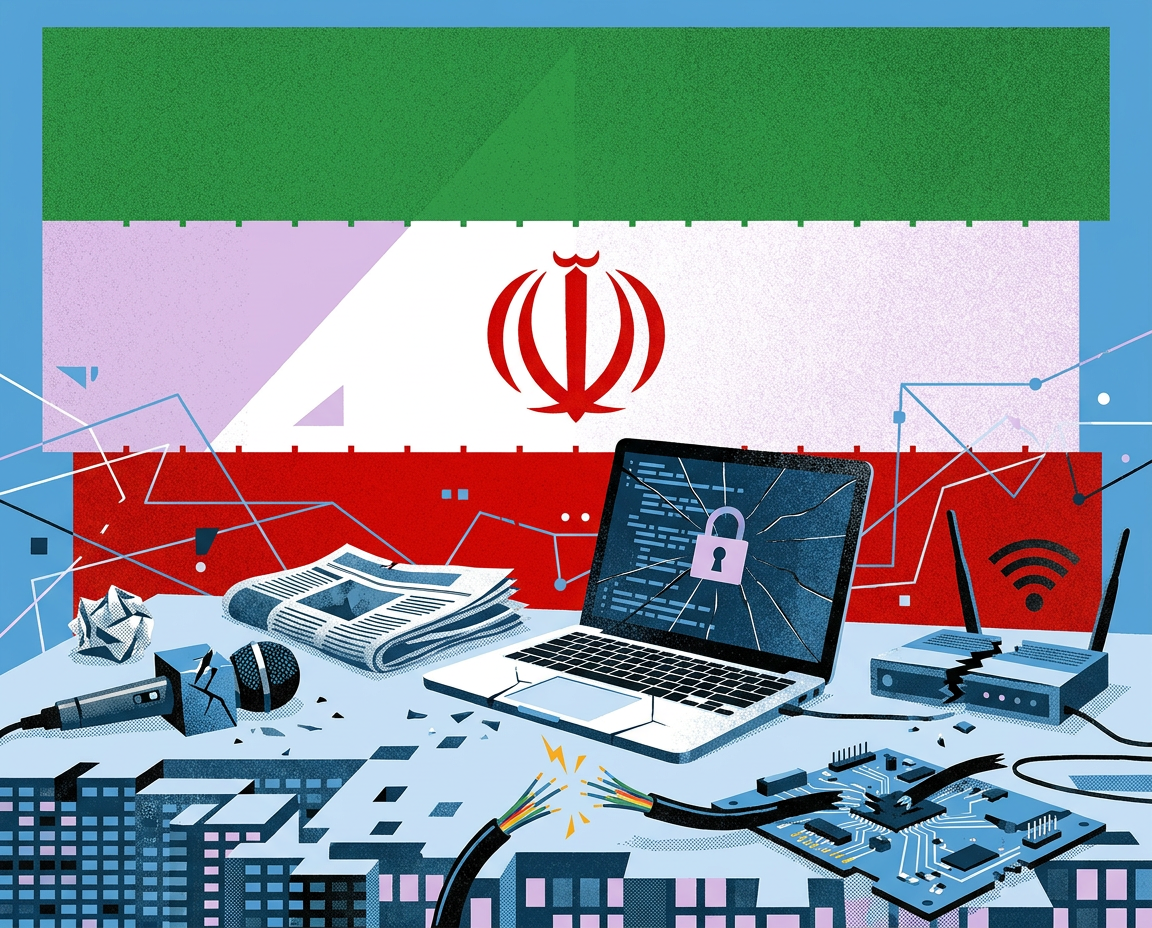
Internet Shutdowns, Press Freedom and the Global Information Crisis: Iran as a Case Study
-
Be Prudent, Be Deliberative, Be Prepared
-

CNTI Newsgeist 2025: Trust, Truth and Innovation in a Shifting Industry
-

Protecting an Open Internet
-

Letters From the Field
Focus Areas
-
Addressing “Lawful but Awful” Content
—
What are the best ways to manage online content that is “lawful but awful”?
The “lawful but awful” dilemma describes a longstanding tension between legality and morality in which systems, practices and speech may comply with legal standards but cause social harm. Platform companies struggle to apply fragmented, often U.S.-centric “marketplace of ideas” frameworks across diverse cultural and legal contexts. The challenge is not simply one of improving moderation tools or determining liability. It is about defining the desired end state of the information environment itself. Is the goal to reduce harm, preserve maximum speech, redistribute control over visibility, or make platform power more transparent and contestable? At times, these goals may conflict, and different governance approaches may implicitly prioritize one over the others.
Policy deliberation
Balancing free speech with mitigating systemic risk is a challenging task for policymakers. There is no standard or universal definition of “awful” or harmful speech, and there is little consensus on the specific points at which such harm necessitates action. A major legislative concern is the transatlantic divide between the U.S. Section 230 model, which protects platform editorial discretion, and the EU’s Digital Services Act, which mandates transparency and risk assessment. These debates involve competing concerns about free expression, user safety and well-being, and institutional power. Existing measures designed to address harmful content can shift significant authority either to private platforms or to governments, each carrying its own risks for public discourse. Debates also persist over whether platforms should be treated as neutral “common carriers” or as providers of protected editorial rights. These tradeoffs also highlight the practical reality that context-sensitive, large-scale moderation remains inherently difficult — if not impossible — to execute consistently.
Journalistic concerns
While journalists are not the only professionals — or even individuals — navigating these tensions, they operate under uneven legal protections across jurisdictions, which can both enable critical reporting and, at times, prevent harmful content from being held accountable. Some journalists’ workflows are shaped by the need to document human rights violations, which often requires sharing graphic or disturbing material. This creates a near paradox: platforms can serve as essential archives that preserve evidence and enable accountability, yet the same content can also cause harm to audiences. More profoundly, journalism itself faces significant challenges as the line between legacy journalists and content creators continues to blur, complicating who qualifies for legal protections. At the same time, journalistic business models and audience reach are increasingly affected by “visibility moderation,” in which platforms’ content moderation quietly limits how widely content is distributed. This can reduce the impact of important but sensitive reporting without a clear explanation or meaningful opportunity to challenge those decisions. Journalists must also navigate failures in algorithmic moderation that misinterpret political speech or protest slogans as violations, underscoring the need for more context-sensitive, human-led moderation to protect legitimate news coverage.
Technology governance
As technology firms do not operate in isolation from governments and institutions, developers are tasked with designing mechanisms that are transparent and democratic, while avoiding extreme openness that could be exploited by malicious actors. In addition, current algorithms have a limited ability to parse complex, context-dependent intent, such as satire. Multi-stakeholder alliances — made up of developers, civil society organizations and governments — must also grapple with the dual role of generative AI as both a detection tool and a source of harmful content. There are also issues around the lack of regional and linguistic expertise needed to prevent Euro-American cultural biases in global systems, as well as platforms’ economic incentives to amplify controversial content. Looking ahead, governance may shift toward user-controlled filtering rather than removal to make platform power more legible and contestable.
-
Protecting an Open Internet
—
How can we encourage the protection of an open internet?
An open internet is critical to functioning, free societies. As governments around the world turn their attention to issues of internet governance — including efforts to tackle disinformation and protect user data — the risk of fragmented internet experiences increases. Some policies deliberately create fragmentation, and some policies result in fragmentation as an unintended consequence.
Policy deliberation: It is important that policy frameworks address the distinctions among different forms of fragmentation, the (limited) scenarios in which content fragmentation is justified and how to minimize the impact of fragmentation. To discourage fragmentation, internet regulation can focus on a number of intermediate goals, such as:
Regulations should also account for the global nature of the internet, particularly when it comes to the rights of journalists — and the public — to communicate and share information within and across borders.
Journalistic concerns: Internet blocks and shutdowns make it challenging for news providers to both report and distribute their work. They also limit the public’s ability to access a range of information above and beyond what their government selects. An open internet is particularly important for people to access online-only and online-first media. In some cases, independent media can help raise awareness about internet censorship and technical issues that threaten an open internet.
Governance: Tech stakeholders can help protect a free and open internet by incorporating encryption into their products by default, participating in multistakeholder governance processes and supporting interoperable standards. Interoperability means that devices, platforms and applications made by different companies can work together, which in turn gives end-users more choice.Explore Focus Area Open Internet
Continue Reading
Showing 1 – 3 of 9 Posts
-
World Press Freedom Day 2025: About Half of Surveyed Journalists Report Their Government Seeks Too Much Control Over Their Journalism
Three quarters of surveyed journalists do not think it is OK for their government to define journalism, regardless of perspective on government interference
-
Stories of Success at a High Price: Accountability Journalism in the Largely Autocratic MENA
The ICFJ Knight Trailblazer Award that I received in Washington on November 14 in many ways symbolizes my life-long mission to encourage accountability journalism and equip journalists throughout the Middle East and North Africa (MENA) with the tools to practice…
-
World Press Freedom Scores Fall Back to 1993 Levels – the Launch Year of World Press Freedom Day
This analysis sheds important light on the downward trend over the last decade for press freedoms around the world.
Explore More Topics